Dec 17, 2025
Hello,
Happy Holidays! As we enter this season of reflection and connection, we invite our community to come together to help reduce stigma—not only across our state, but around the world. Substance Use Disorder (SUD) is a chronic illness that affects the brain, particularly areas involved in reward, motivation, and memory.
The language we use when talking about SUD and people living with it can have a powerful impact on both how individuals see themselves and how they are treated by others. Using person-first language affirms dignity, supports recovery, and fosters understanding and compassion.
Together, we can work toward eliminating stigma and building a deeper, more accurate understanding of addiction and its impact on people and families every day.
As we close out the year, we wish you a warm, restful holiday season. We look forward to continuing this important work together in the year ahead.
Beth Seese, MS, CCRC
OPEN Managing Director
SUBSTANCE USE DISORDER IN PRIMARY CARE
Substance Use Disorders (SUDs) are treatable, chronic diseases characterized by strong cravings and compulsion to use, even when faced with negative consequences.
Since a large number of people interact with primary care providers, these environments play a vital role in identifying and treating SUD. Primary healthcare settings are uniquely equipped to support individuals with SUDs by providing patient-centered care within their local communities.
Explore this New Webpage
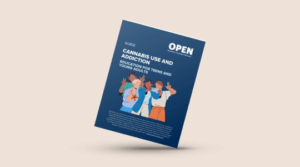
CANNABIS USE AND ADDICTION EDUCATION GUIDE FOR TEENS AND YOUNG ADULTS
Use this guide to educate teens and young adults on cannabis use and addiction.
This guide will understand:
- What is in cannabis
- How it affects your brain
- The short and long-term risks of cannabis use
Explore this Resource
CLINICIAN TO CLINICIAN CONSULT SERVICES
Have a question about managing patients with substance use disorder or complex pain? Request a virtual consultation with one of OPEN’s addiction medicine providers. Available Monday through Friday, 9AM to 5PM.

Submit a Consultation
OVERODSE RESCUE TRAINING EDUCATION PROGRAM

Knowing how to respond to an overdose is an important skill that could help you save a life. OPEN offers expert-led naloxone training to teach you everything you need to know to take action during a suspected overdose.
Request a Training Session
UPCOMING CLOSURES
The OPEN office and several of our programs will be closed during the holidays. Please refer to the following upcoming holiday hours:
OPEN Office: Closed Thursday, December 25th through Thursday, January 1st
Consultation Services: Closed Thursday, December 25th through Thursday, January 1st
OPEN Warmline: Closed Wednesday, December 24th through Friday, December 26th and Wednesday, December 31st through Friday, January 2nd.
UPCOMING EVENTS
For prescribers, all webinar credits qualify for the DEA required SUD training. FREE CME, MCBAP and Social Work CE credits.
Emerging Drug Trends in Michigan
January 13, 2026
@ 12:00 pm – 1:00 pm
1.0 CE Credit
CME, MCBAP, SW
Presenter:
Elaine Dougherty
Join us for an insightful webinar exploring the latest emerging drug trends in Michigan, where we’ll delve into current patterns affecting communities across the state. We’ll explore the significant implications these trends have on public health and safety throughout the state. Additionally, we will discuss how these trends are affecting public health, safety, and community well-being, while exploring effective strategies for prevention and intervention.
Introduction to Treating Patients with Buprenorphine for Primary Care Providers
March 4, 2026
@ 9:00 am – 1:00 pm
4.0 CME Credits pending
Presenters:
Chris Frank, MD, Ph.D.
Eliza Hutchinson, MD, FASM
Primary Care Providers (Physicians and Advanced Practice Professionals) who attend this MOUD training are eligible to receive a $250 incentive.
What’s New: Emerging Substance Use Disorder Trends in Obstetrics
March 5, 2026
@ 12:00 pm – 1:00 pm
1.0 CE Credit
MCBAP
1.0 CE Credit pending
CME, SW
Presenter:
Alex Peahl, MD, M.Sc.
Substance use during pregnancy continues to evolve, with new patterns, substances, and care challenges. This session will provide an overview of recent trends in substance use among pregnant and postpartum populations, discuss associated maternal and neonatal outcomes, and highlight evidence-based strategies for management. Participants will gain insight into how evolving drug trends intersect with stigma, access to care, and health equity.
Alcohol Use Disorder & Liver Disease: Improving Diagnosis, Treatment, and Outcomes
April 14, 2026
@ 12:00 pm – 1:00 pm
1.0 CE Credit pending
CME, MCBAP, SW
Presenter:
Ponni Perumalswami, MD, MSCR
Alcohol use disorder (AUD) is common, underdiagnosed, and a major contributor to rising liver-related morbidity and mortality. This session reviews evidence-based strategies for screening, diagnosing, and treating AUD, including behavioral and medication options appropriate for patients with liver disease. Participants will gain practical tools to improve identification and management of AUD in routine clinical care.
From Cell to Community: Supporting Individuals Reintegrating After Incarceration
May 6, 2026
@ 12:00 pm – 1:00 pm
1.0 CE Credit pending
CME, MCBAP, SW
Presenter:
Eliza Hutchinson, MD, FASM
Adam Grant
This session will explore the health risks associated with incarceration, with a focus on the transition from carceral to community settings among individuals with a history of opioid use disorder. We examine common barriers to care faced after release and highlight strategies to strengthen clinical engagement. Participants will gain practical skills to support more effective, compassionate, and equitable care for individuals with current or past incarceration exposure.
PUBLICATIONS THIS QUARTER
Access literature with OPEN’s publication portfolio. We use evidence to inform public health policy and practice recommendations.
Mind the GAP: Observing Adverse Effects in Clinical Trials
- Anesthesiology, 10/1/2025
- The primary outcome of hospital length of stay was not different between group wtih the median length of hospital stay was 6.2 days (interquartile range, 4.2 to 9.0) in the placebo group and 5.9 days (interquartile range, 4.1 to 8.0) in the gabapentin group.
- A meta-analysis of 14 trials including 3,503 patients revealed that on average, of 7 patients receiving gabapentin, only 1 achieved at least moderate, or 30%, pain relief.
- The secondary outcomes on this study, which included opioid use, pain, quality of life, and safety, give a broad view of the study’s implications.
Navigating the Balance: Risk and Relief in Opioid Prescribing for Patients with Cancer
- American Cancer Society, 10/1/2025
- The increase in pain scores despite stable prescribing suggests a potential reduction in opioid dosing, raising concerns that prescribers may not be fully meeting the pain management needs of patients with metastatic disease.
- Although the use of patient-reported pain is a strength compared with administrative or pharmacy claims data alone, the subjective nature of pain highlights the value of also tracking changes in other key domains.
- Future research would benefit from prospectively collected, validated patient-reported outcome measures—including pain, function, mood, and sleep—to offer a more holistic view of changes to opioid prescribing in this vulnerable population.
Efficacy of Opioid Reduction Programs in Opioid Stewardship
- JACS, 10/6/2025
- Melucci and colleagues describe a scalable opioid stewardship program for safe postoperative care and recovery of opioid naïve adults.
- In this program, among 6,619 opioid naïve adults undergoing one of 15 elective procedures, opioid prescribing at discharge was reduced for 14 of the 15 procedures, and for 10 procedures there was a median prescription quantity of zero, exceeding the initial goal to reduce overall opioid prescriptions at discharge by 20% post-intervention, resulting at 67.1% reduction rate.
- Given the increasing prevalence of opioid exposure, substance use, and other risk factors for poor pain and opioid-related outcomes after operation, future interventions will need to integrate methods to identify patients at risk, mitigate stigma, and provide comprehensive care to meet postoperative recovery needs.
Cross Sectional Multi-Sample Study of Nonfatal Overdose in Adolescents and Young Adults in the Fentanyl Era
- ISAJE, 10/11/2025
- We examined the prevalence of nonfatal overdose and characteristics associated with overdose history in adolescents and young adults.
- Statistically significant characteristics associated with overdose history in all samples included history of opioid misuse (ORs ranging from 1.98 to 6.73) and family members with a substance use problem (ORs range from 1.27 to 2.05).
- Frequent and early onset alcohol and cannabis use was also associated with overdose history in several samples.
Impact of Time Zero Designation on Estimated COVID-19 Antiviral Effectiveness in Observational Studies
- American Journal of Epidemiology, 10/13/2025
- We compared the impact of different time zero designations on the estimated effectiveness of nirmatrelvir-ritonavir for COVID-19.
- We compared the impact of different time zero designations on the estimated effectiveness of nirmatrelvir-ritonavir for COVID-19 among the identified US veterans who tested positive for SARS-VoV-2 from April 2022-March 2023 and compared nirmatrelvir-ritonavir versus no treatment using 5 time zero approaches.
- Thirty-day incidence of hospitalization or death was lower in the nirmatrelvir-ritonavir group than the no treatment group for all time zero approaches.
The Emergence of Sex Differences in Primary Pain During Adolescence: A Conceptual Developmentally-Oriented Biophysical Model and Opportunities for Further Investigation
- Springer Nature Link, 11/4/2025
- This review takes a developmentally-oriented biopsychosocial perspective on the emergence of sex and gender differences in primary pain by highlighting adolescence as a pivotal period marked by pubertal maturation.
- The mechanisms underlying sex and gender differences in pain remain largely unknown but likely involve the cascade of hormonal changes associated with puberty, which affects all organ systems, including the CNS, and is related to a multitude of behavioral, cognitive-affective, and even sociocultural factors.
- Adolescence appears to be a second sensitive period for neural reorganization induced by massive changes in the neuroendocrine system, creating a window of vulnerability for developing primary pain in youth, as highlighted in the presented developmentally-oriented biopsychosocial model.
A Person-Centered Approach to Examining Out-of-School Participation Among Black Adolescents and Its Association with Racial and Ethnic Identity
- Journal of Adolescence, 11/6/2025
- The goal of the present study was to better understand the relation between out-of-school activity (i.e., after-school hours and summer months) participation and racial and ethnic identity among Black adolescents.
- Black identifying adolescents, ages 14-19 (N = 181; M age = 16.30, SD = 1.38; 69% female) recruited from the Chicagoland area completed questionnaires at a single timepoint. More out-of-school participation overall (i.e., total, types, and intensity) and school-based activity participation were significantly associated with higher reported racial and ethnic identity formation.
Psychosocial Predictors of Dysmenorrhea Stability and Change: A Two-Year Longitudinal Study
- ClinicalKey, 11/12/2025
- To identify menstrual pain trajectories over two years in young women with moderate-to-severe intensity, and determine baseline factors, including modifiable variables, that differentiate these trajectories, this secondary analysis of a prospective cohort study included 157 women aged 18-45 years, enriched for moderate-to-severe menstrual pain.
- Four trajectories, high-stable pain (63%), low-stable pain (15%), improving pain (11%), and worsening pain (11%), emerged over the periods (without/before analgesic use) reported at three visits, baseline, Year 1 and Year 2: most menstrual pain trajectories remained stable over two years.
- Opioid-prescribing patterns in the emergency general surgery setting are widely variable and sometimes inconsistent with elective guidelines. Procedure- and patient-level factors unique to the emergency setting may inform postoperative pathways that improve opioid stewardship.
Prescription Drug Monitoring Programs and Perioperative Opioid Prescribing and Adverse Events
- HealthAffairs Scholar, 11/12/2025
- To determine the association between prescription drug monitoring program (PDMP) mandates and perioperative outcomes, we analyzed 2016-2019 Medicare claims for patients ≥65 undergoing surgery in 21 states that enacted PDMP use mandates in 2017-2018 vs states without mandates during 2016-2019. Among 597,455 procedures for 462,290 patients (mean age 73.3 years; 54.5% female), mandates were not associated with changes in opioid prescribing, high-risk prescribing, or adverse events (difference-in-differences estimate: -0.03% points, 95% CI: -1.0, 0.9).
- PDMP use mandates were not associated with changes in perioperative opioid prescribing or post-surgical adverse events, suggesting that policy makers should consider pairing mandates with evidence-based, procedure-specific prescribing guidelines.
The One Big Beautiful Bill Act: Implications for Surgical Practice, Training, and Patient Care
- Annals of Surgery, 11/17/2025
- The One Big Beautiful Bill (OBBB) Act is projected to produce a significant health coverage loss and drive major increases in mortality and patient acuity.
- The OBBB Act destabilizes surgical care delivery by simultaneously increasing uncompensated care and stripping hospitals of over $1 trillion in Medicaid revenue, forcing service-line closures.
- As the practicing surgeons and trainees face greater moral injury, burnout, and loss of financial support, the surgical workforce will shrink, leading to reduced accessibility to surgical care.